
lab(introduction should include the purpose of the lab,some
background information and hypothesis :like which temperature was
better tempruture to growth the yeast 20C or 23C ? Or which method
was more effective for counting the cells, the hemocytometer or the
spectrophotometer or the drop plating ?) materials and methods (
summarize what you did in the lab in order if somebody read the lab
know what was done in it!)
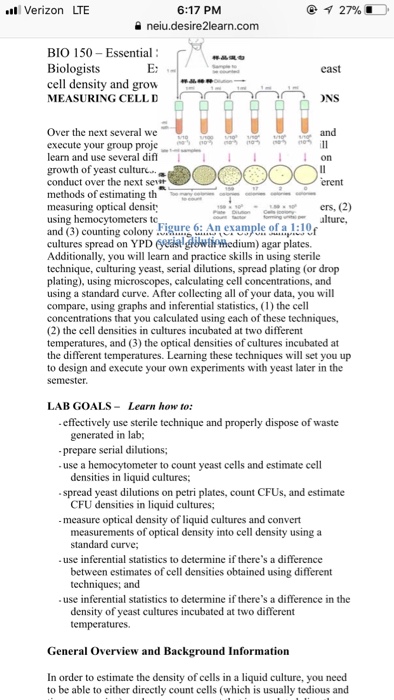
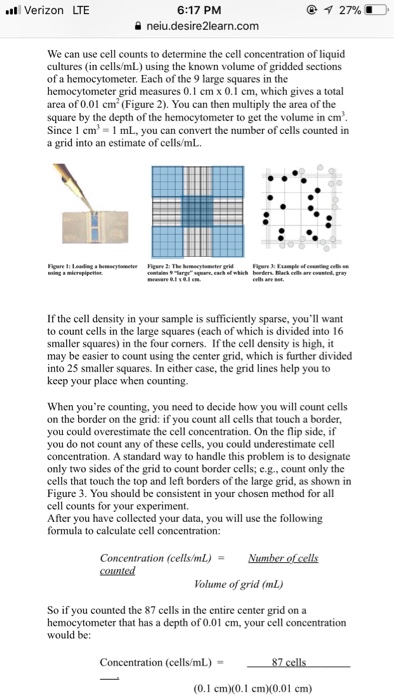
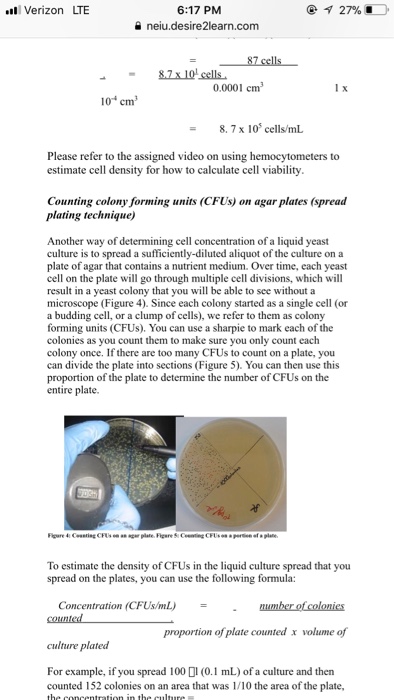
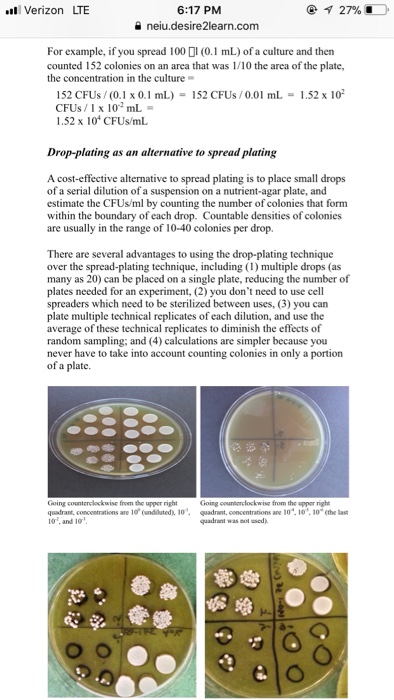
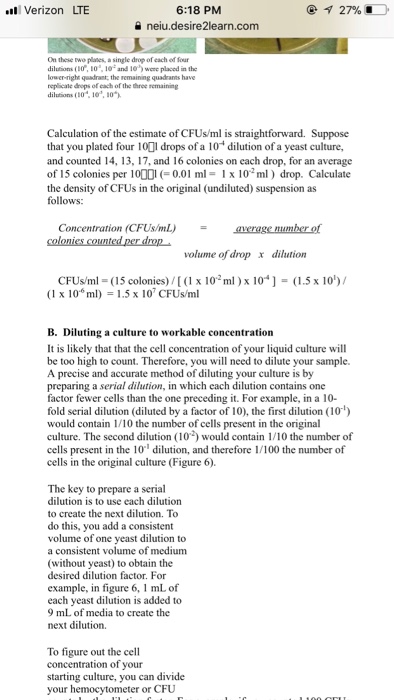
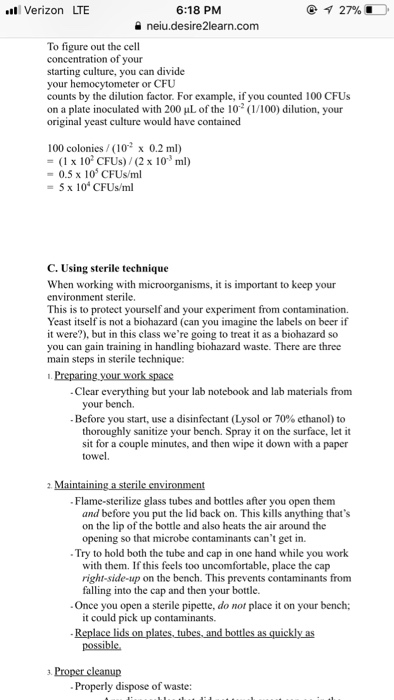
6:17 PM 숱 neiu.desire2learn.com Verizon LTE イ27% BIO 150 Essential Biologists cell density and grow E: east MEASURING CELLD NS Over the next several we execute your group proje learn and use several difi growth of yeast culture. conduct over the next se methods of estimating th measuring optical densit using hemocytometers te and (3) counting colony ↓ ↓ ↓ ↓ ↓ ↓ on 30 ers, (2) alture, On etample o of cultures spread on YPD。easliantly medium)agarplates. Additionally, you will learn and practice skills in using sterile technique, culturing yeast, serial dilutions, spread plating (or drop plating), using microscopes, calculating cell concentrations, and using a standard curve. After collecting all of your data, you will compare, using graphs and inferential statistics, (1) the cell concentrations that you calculated using each of these techniques, (2) the cell densities in cultures incubated at two different temperatures, and (3) the optical densities of cultures incubated at the different temperatures. Learning these techniques will set you up to design and execute your own experiments with yeast later in the semester. LAB GOALS-Learn how to: effectively use sterile technique and properly dispose of waste generated in lab; prepare serial dilutions; use a hemocytometer to count yeast cells and estimate cell spread yeast dilutions on petri plates, count CFUs, and estimate measure optical density of liquid cultures and convert densities in liquid cultures; CFU densities in liquid cultures; measurements of optical density into cell density using a standard curve; use inferential statistics to determine if there’s a difference between estimates of cell densities obtained using different techniques; and use inferential statistics to determine if there’s a difference in the density of yeast cultures incubated at two different General Overview and Background Information In order to estimate the density of cells in a liquid culture, you need to be able to either directly count cells (which is usually tedious and
ScholarMatic: Explanation & Answer
Your ready answer from a verified tutor is just a click away for as little as $14.99


Click Order Now to get 100% Original Answer Customized to your instructions!



